
Condition & Value
In the secondary market, "rarity" brings people in, but "condition" determines the final price. Understanding how to grade a piece before you buy is the difference between a centerpiece and a liability
⚠️ This video is an example of what NOT TO DO. ⚠️
We suggest that you leave the art alone, do not try to "fix" and just leave art how it currently stands.
The Red Flags: Condition Issues
When buying online or at auction, look for these specific "deal-breakers." If these are present, the value is significantly diminished.
- Vinegar Syndrome: If you open a package and smell a sharp, vinegar-like odor, the acetate is decomposing. This is a "contagious" chemical reaction that can spread to other cels. Value Drop: 80-90% (Rescue status only).
- Paint Lifting & Cracking: Look for "spider-web" cracks in the thick white paint or areas where the paint has physically detached from the plastic.
- Line Fading: Animation lines were applied via a xerographic or inking process using light-sensitive materials, and their longevity often depends on the original studio's budget. For instance, while Toei Animation frequently used more economical inks for standard TV series—which are prone to "ghosting" or turning light brown—their higher-budget OVAs and feature films often utilized premium inks with much better market stability. If these lines have faded significantly, the cel loses its "visual punch," and its overall condition and desirability are considered diminished.
- Warping/Buckling: If the cel is no longer flat and looks wavy (like a potato chip), it has likely been exposed to high heat or humidity.
- Folding, Cutting & Trimming: Studios or collectors sometimes cut cels or backgrounds to fit smaller frames. A "trimmed" cel or a background with cut edges is considered altered and loses significant value.
- Toei Framing & Alterations: This was particularly common with Toei Animation; cels officially sold in their "standard" cardboard or paper frames often featured a random, mismatched background that was trimmed down to fit the display. While these are vintage, the act of trimming creates a permanent loss of originality and longevity compared to a full-size sheet.
- Folded Drawings & Backgrounds: Production drawings (Douga/Genga) that have been folded to fit in envelopes have permanent "stress lines" that can never be fully pressed out. These are permanent scars on the paper. Painted backgrounds can also be seen folded to fit frames, or while being kept in storage.
- Hidden Repairs & Reconstruction (Tampering): * Marker Re-lining: Watch out for "shaky" lines or lines that look too black and thick compared to the rest of the cel. Amateur sellers often try to "trace" over faded lines with a Sharpie. This is considered damage and ruins the cel's integrity.
- Paint Touch-ups: Look for areas where the paint texture or color doesn't quite match the surrounding area. Modern acrylics used to "fix" chips can react poorly with the original 30-year-old vinyl paint.
- Erasure Marks: On drawings, look for "thinned" paper where a previous owner tried to erase studio notes or animator corrections to make the drawing look "cleaner."
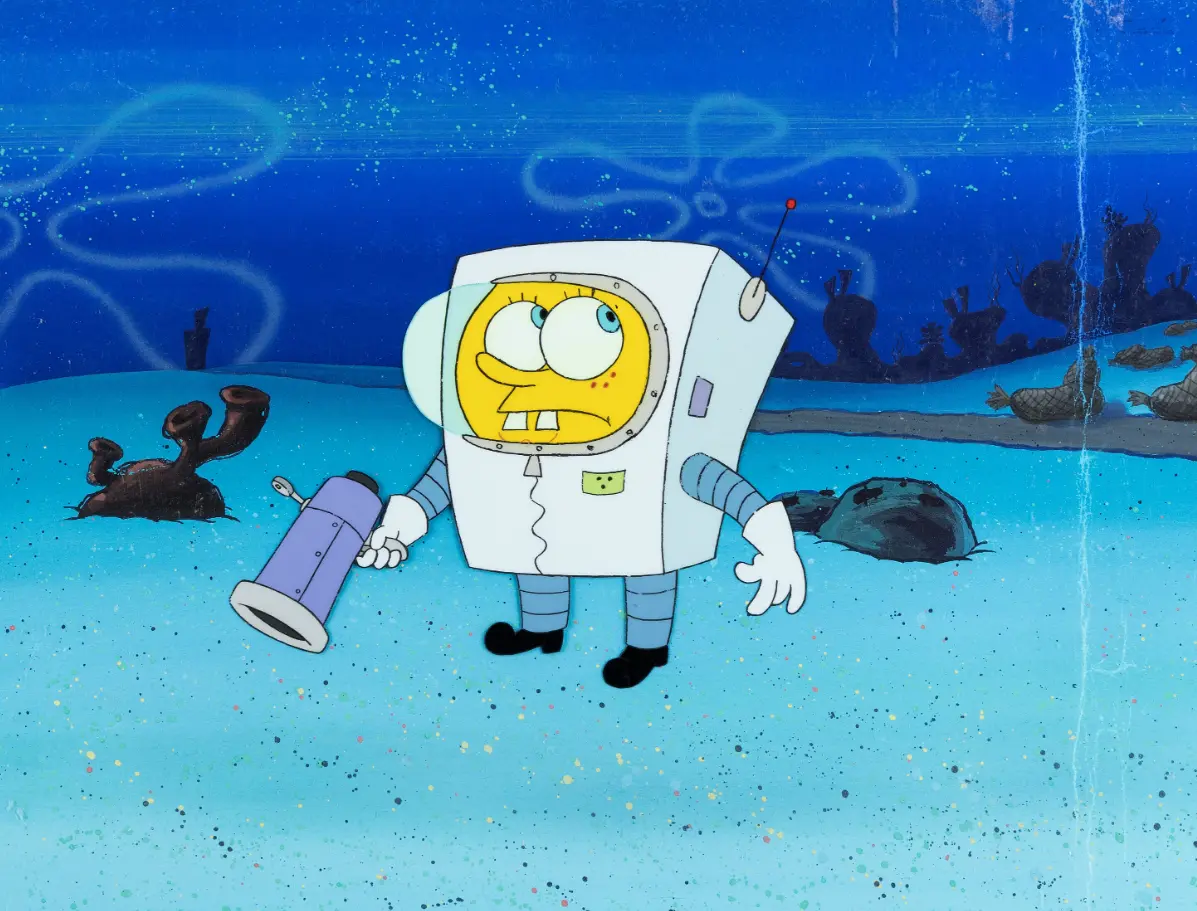
Folded & damaged background - Spongebob Squarepants
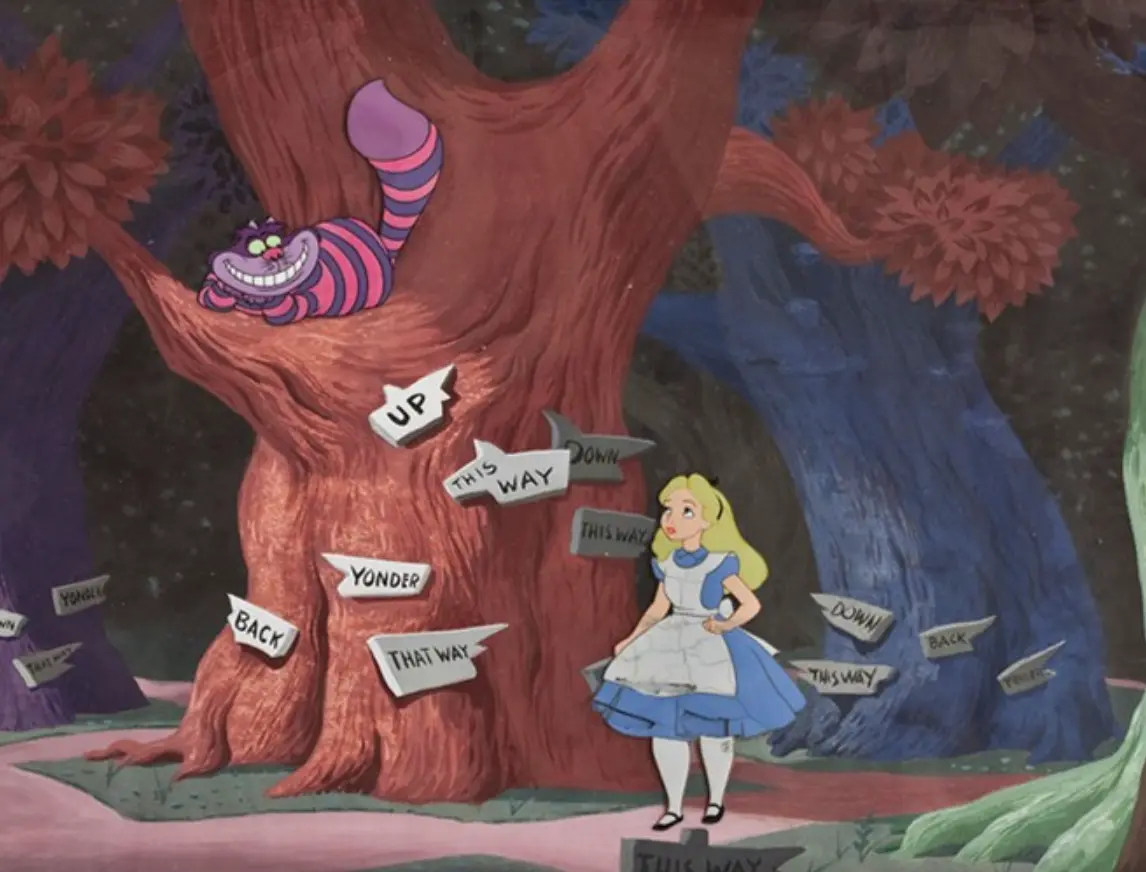
Paint Cracking - Alice In Wonderland
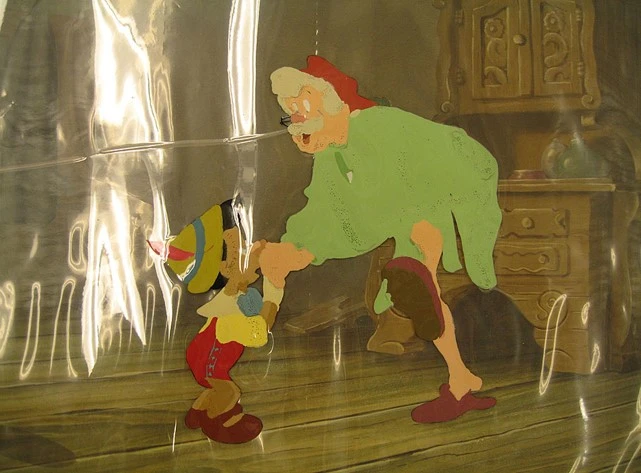
Line work faded - Pinocchio
The Value Hierarchy: What Drives the Price?
Not all cels from the same show are created equal. It is vital to remember that production art collecting is fueled by a deep passion for animation history. The community values preservationists over "flippers," and the market naturally rewards pieces that offer both visual impact and archival longevity.
The "desirability" of a piece is generally determined by where it sits on this scale:
- The "A-Grade" Key Moment: A full-figure shot of a main character with their eyes open, looking at the camera. If it’s a famous scene (e.g., Goku turning Super Saiyan for the first time), the price sky-rockets.
- A Matching Set (Cel + original pencil drawing) is always worth more than a cel alone.
- The drawing acts as a "DNA test"—it proves the cel was used in production and wasn't a commercial fan-cel (Sericel).
- Key Frames & "Ends": Key frames sit at the top of the hierarchy as they feature the most "striking" poses and stay on screen longer than standard in-betweens. Key Ends (like an A1 End) are the best, as they are held the longest and can sometimes make up an entire "cut" alone, such as in a slow camera pan.
- Matching Sets (Key Master): A cel that comes with its original matching hand-painted background. These are the "Holy Grails" of collecting.
- The "Eyes Closed" Discount: Cels where the character has their eyes shut or their back to the camera are significantly less valuable than "eyes open" frames.
- Mouth-Only Frames: In anime, often only the mouth moves. A cel that is just a tiny mouth on a clear sheet is worth very little unless it comes with the "static" face layer.
- The "Iconic Scene" Exception: Certain legendary moments like a character's first appearance, a major death, or a signature "meme" frame often bypass standard condition rules. Because these frames are unique historical artifacts, collectors may still prioritize acquiring them even if they show signs of age, like line fading or paint chips. In these rare cases, the historical significance of the frame can outweigh the physical decay, though savvy collectors still weigh these flaws heavily when determining a fair value.
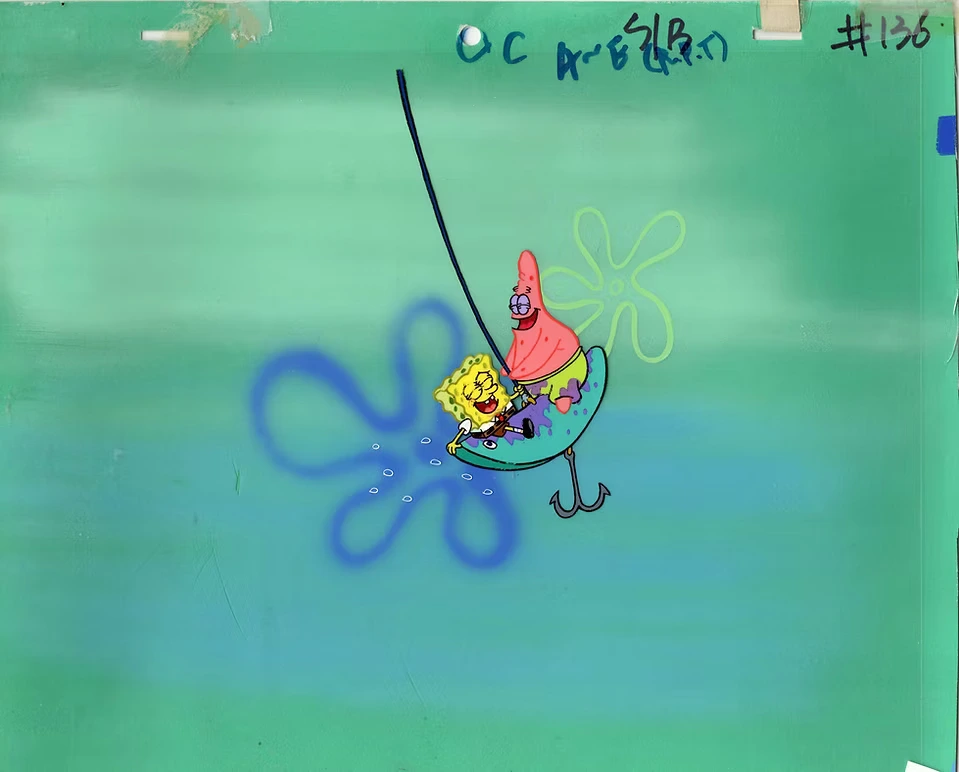
Spongebob & Patrick swinging in "Hooky" - Spongebob Squarepants
How to Spot a "Re-Lined" Cel
If you suspect someone has tried to repair the linework, try these two tests:
- The Light Test: Hold the cel up to a bright light and look at it from an angle. Original ink usually has a consistent "sheen." Modern marker ink often looks "flat" or "metallic" compared to the original line.
- The Reverse Side: Flip the cel over. Original linework is applied to the front, while paint is on the back. If you see "bleeding" or ink marks on top of the paint on the back, someone has tried to fix it after it was painted.