
Framing & Display Guide
Displaying your animation art is the best way to enjoy it, but a standard frame can be a "death sentence" if not handled correctly. Because cels are chemically active, they require a framing strategy that balances protection from the outside world with the ability to "breathe" on the inside. Collectors can have too many pieces to frame, or not enough space for frames. It's okay to keep your art in a portfolio, or find other ways to display your collection.
The "Breathable" Seal: Dust Covers
Many collectors wonder if a frame should be airtight. The answer is no. A completely hermetic (airtight) seal can trap harmful gasses and moisture, leading to paint damage.
- The Paper Backing: Most professional frames use a black or brown paper "dust cover" on the back. This is the ideal setup—it is tight enough to keep out dust and pests, but porous enough to allow for microscopic air exchange.
- DIY Frames & Removable Backs: While it is tempting to use "ready-made" frames with removable clips so you can easily access the art, try to avoid opening the frame frequently. Every time the seal is broken, you introduce new dust, pollutants, and humidity fluctuations to the delicate paint and paper.
- Storing Documents (The Back of Frame): If your art came with a Certificate of Authenticity (COA) or the original production drawing, do not lose them! You can store these in an Archival Pocket (Full-View Mylar or Polypropylene sleeve) taped securely to the outside back of the frame. This keeps the provenance with the art without risking the chemicals from the COA ink affecting the cel inside.
- Inspect Before Framing: Make sure you check the art for any issues before framing. If a cel is showing signs of mold or vinegar syndrome
- The "Puffy" Warning: Keep an eye on the back of your frames. If the paper backing begins to "puff out" or looks like it's under pressure, this is a major red flag. It suggests the cel is off-gassing (Vinegar Syndrome) and the gasses are trapped. If you see this, the art needs to be removed and inspected immediately.
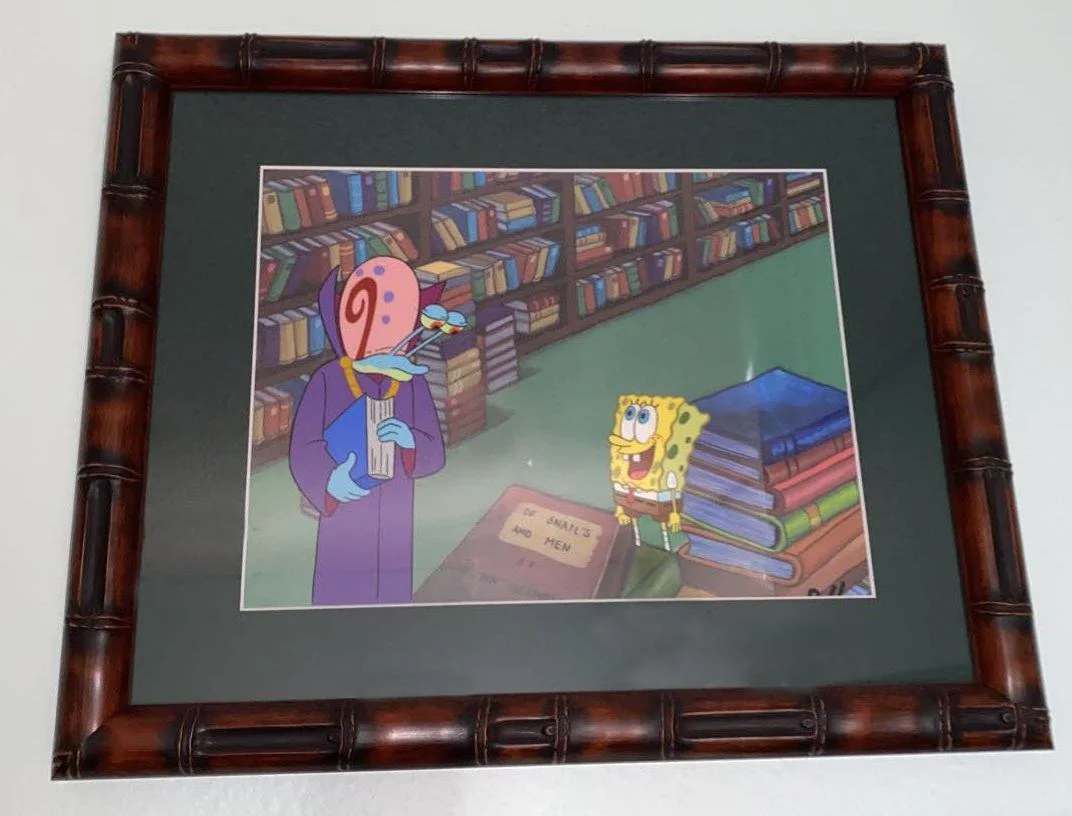
Framed setup of Dream Gary from episode Sleepy Time - Spongebob Squarepants
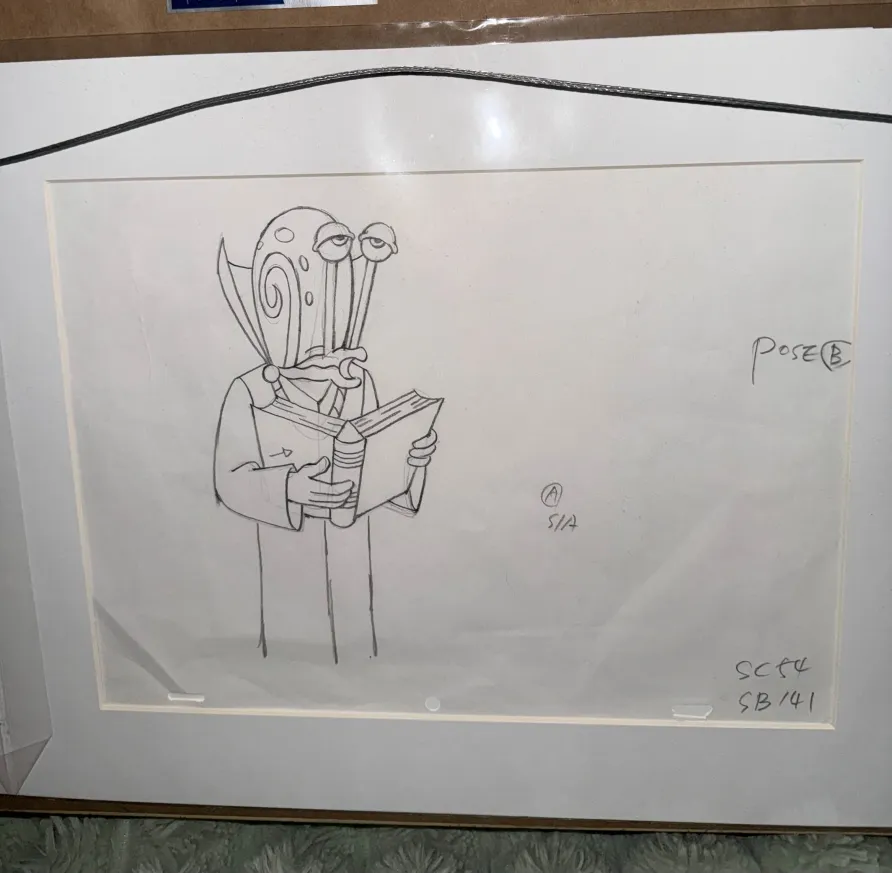
Drawing of Dream Gary in Archival Pocket on the back of the frame
Internal Architecture
What happens inside the frame is even more important than the frame itself. The goal is to ensure the cel never makes physical contact with the glass.
- Spacers & Float Mounting: You must use spacers (thin plastic strips hidden under the frame lip) or a double-thick acid-free mat. This creates a 1/8" to 1/4" air gap. Without this, humidity can cause the paint to fuse to the glass—a mistake that is often impossible to fix.
- Acid-Free Backing: Ensure your framer uses acid-free foam core or 4-ply museum board as the support. Standard cardboard contains "lignin," which will turn your production paper yellow and brittle over time.
- MicroChamber Paper: As an added layer of insurance, tuck a sheet of MicroChamber paper behind the art inside the frame. It acts as a "pollution sponge," soaking up any acids before they can damage the paint.
UV Protection, Glass & Lighting
The black ink on a cel and the delicate graphite of a drawing are incredibly sensitive to light. To protect your investment, you need to filter the light hitting the art and control where it hangs.
- Museum-Grade Glazing: Never use standard window glass. You have two professional paths:
- UV Protective (Baseline): Must be rated for 99% UV protection to prevent "line fading" (where ink turns brown or disappears). UV Acrylic (Plexiglass) is often preferred over glass because it is shatterproof and provides better thermal insulation.
- Museum Glass (The Ultimate Upgrade): This combines 99% UV protection with an anti-reflective coating. It eliminates the "mirror effect," making the glass virtually invisible. While more expensive, it is the best way to see the fine textures of the paint and pencil without glare.
- Strategic Placement: Even with UV glass, light is cumulative.
- Avoid "Direct Hit" Zones: Never hang art directly opposite a window or under a skylight.
- LED is King: If you use picture lights, ensure they are LED. Unlike Halogen or Incandescent bulbs, LEDs produce minimal heat and zero UV output. High heat from a bulb positioned too close to a frame can cause acetate to warp or "ripple" inside the mount.
The "Float" Technique
Cels and drawings should never be squeezed flat against the glass. They are physical objects that need a "buffer zone" to remain stable.
- Floating the Art: Instead of "sandwiching" the piece, it should be Float Mounted using archival mounting corners or linen hinges. This allows the material to expand and contract naturally with temperature changes without buckling.
- Achieving the Gap: You must create a physical distance between the art and the glass to prevent the paint from "fusing" to the glazing.
- Spacers: These are thin, acid-free strips hidden under the lip of the frame that prop the glass away from the backing.
- Deep Matting: Using a "double mat" or an extra-thick 8-ply mat creates a deep window. This ensures that even if the cel warps slightly over time, it will never make contact with the glass.
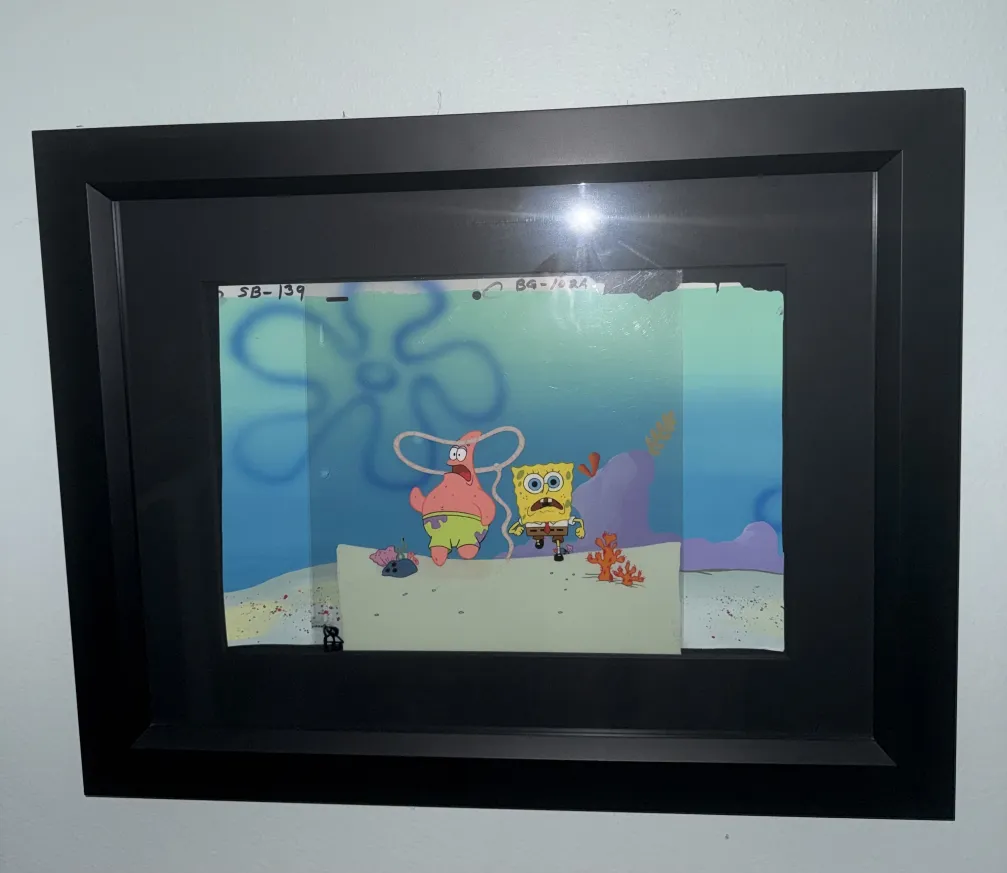
Multi Cel setup framed from episode Texas - Spongebob Squarepants
Using float method
Working with a Professional Framer
When you are ready to frame your piece, skip the big-box craft stores and find a local, dedicated custom frame shop. These professionals have the tools and experience to handle delicate production art.
- Bring the Art (Safely): Bring your art to the shop in its archival sleeve. This allows you to lay different colored mats and frame moldings directly next to the piece. While bold colors can look great, you can never go wrong with a classic Black or White gallery-style frame, it keeps the focus entirely on the animation.
- The Receipt Checklist: When the framer writes up your order, ensure every preservation detail is explicitly listed on the receipt. This is your contract to ensure they don't use "cheap" substitutes. Make sure it lists:
- Glass Choice: Specify 99% UV-Protective or Anti-Reflective Museum Glass.
- Mounting: Specify "Float Mount" with spacers (No tape on the art).
- The Extras: Mention the archival pocket for the COA and the paper Dust Cover.
- Hardware: Ask for a coated metal wire and high-quality wall hooks (two hooks are better than one to keep the frame level and secure).
- Insurance & Value: Because you are leaving a valuable (and often irreplaceable) piece of history, ask the framer to include an estimated replacement value on the intake form for insurance purposes while the art is in their care.
- Be Patient: Quality archival framing is a craft. Expect the process to take at least 2 weeks, though high-end shops with a backlog may take longer. It is worth the wait to know it’s done right.
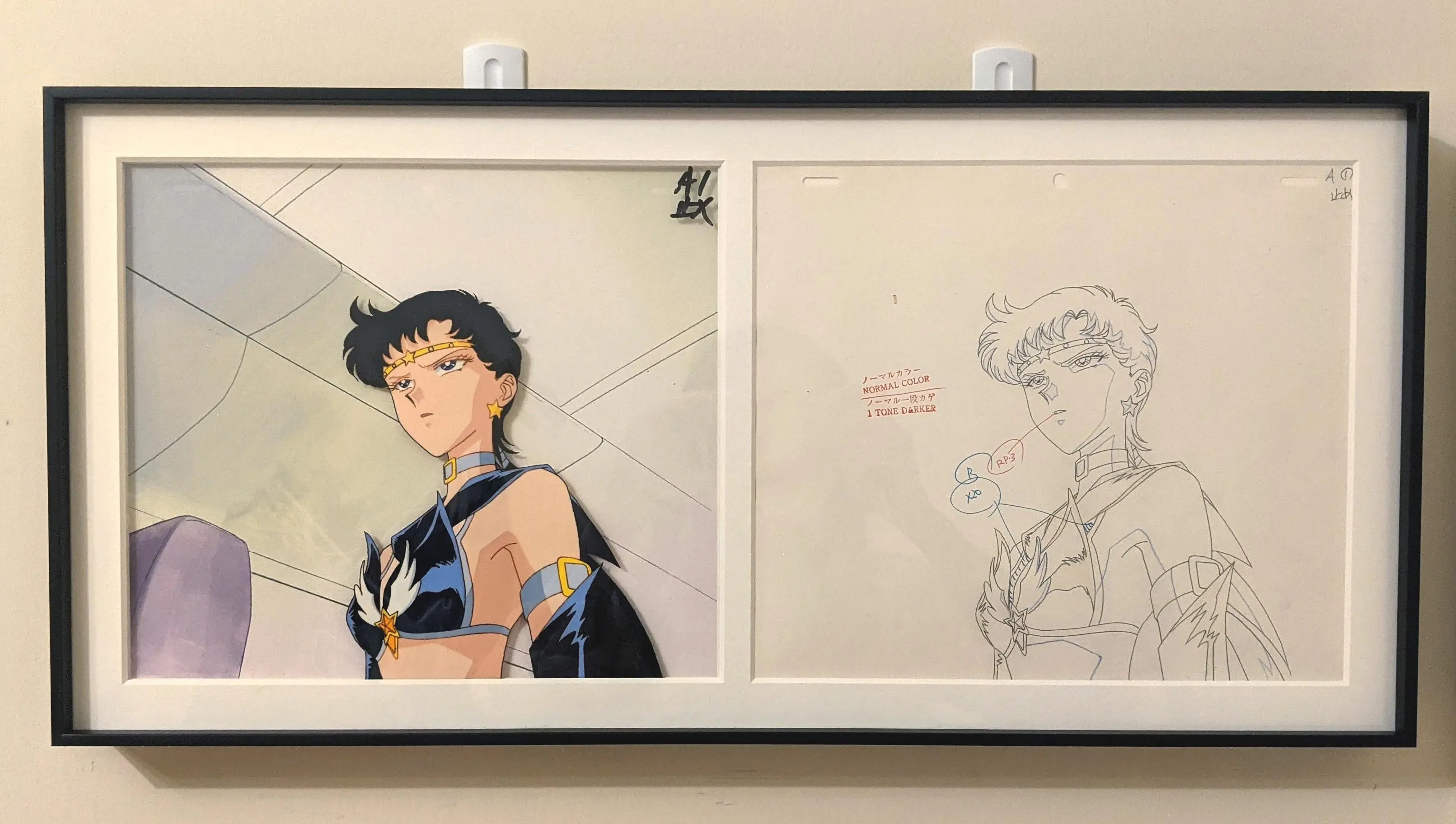
Matching Cel & Drawing framed together - Sailor Moon
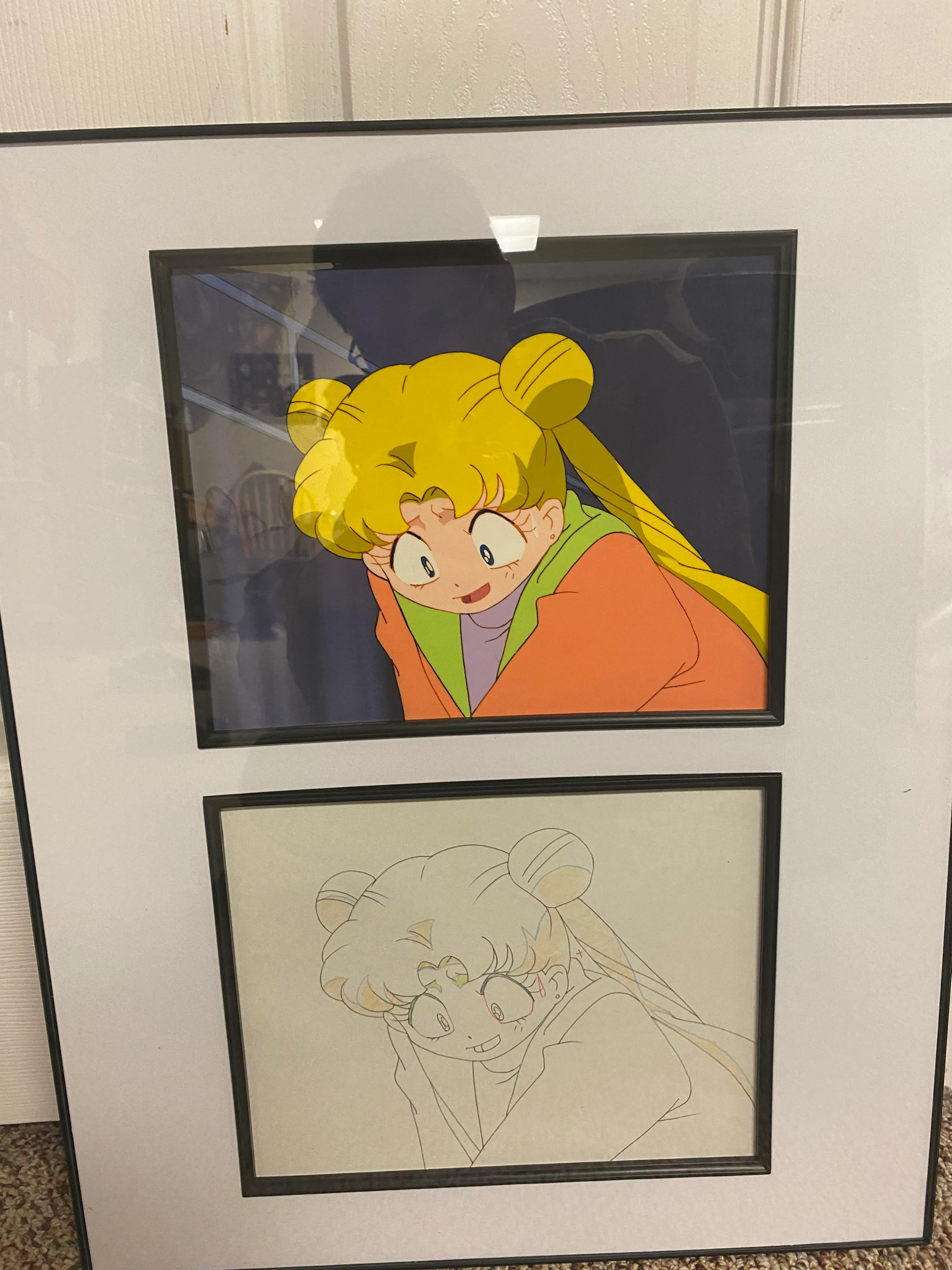
Matching Cel & Drawing Framed - Sailor Moon
Display Maintenance & Layout
When you are ready to frame your piece, skip the big-box craft stores and find a local, dedicated custom frame shop. These professionals have the tools and experience to handle delicate production art.
- Cleaning & Dusting: Never spray glass cleaner or water directly onto the frame, as liquid can seep under the lip and be wicked up by the matting or the art itself. Instead, lightly dampen a microfiber cloth with ammonia-free cleaner to wipe the glazing. For high-end Acrylic, only use specialized cleaners like Novus #1, as standard paper towels and Windex will leave permanent microscopic scratches. You can also use a microfiber cloth or towel to clean the frame from dust.
- Visual Consistency: While animation art is vibrant and varied, using matching frame materials, such as black mats with black frames, allows the collection to blend together as a cohesive gallery. This "uniform" look prevents the frames from competing with each other, ensuring that even if you have art from different studios or eras, they feel like part of a singular, professional library. Of course some pieces deserve or need a differnt look.
- The "Show-and-Tell" Prep: Before hanging a heavy frame, measure your wall space and pre-mark your studs; production art can be surprisingly heavy, and you don't want a "Grail" falling due to a weak anchor. If you plan to take the frame down to show friends the production drawings or COAs tucked into the back archival pocket, ensure you use D-ring hangers rather than a single wire. This makes the frame easier to remove and re-hang safely without the risk of the wire snapping or the frame shifting off-center.
- Lighting the Gallery: As established, LED lighting is the only safe choice for a display room. LEDs emit no UV and negligible heat. If you use a spotlight, keep it at least 3 to 4 feet away from the frame to prevent "hot spots" that can cause the acetate to expand at a different rate than the paint, leading to structural stress over time.
- Environmental Stability: Maintain a consistent room temperature between 65°F – 70°F (18°C – 21°C) and a humidity level of 45% – 50%. Avoid displaying art in rooms prone to temperature swings, like sunrooms or basements. Stability is key; rapid fluctuations cause the acetate and paint to expand and contract at different rates, leading to "paint popping" or cracking.
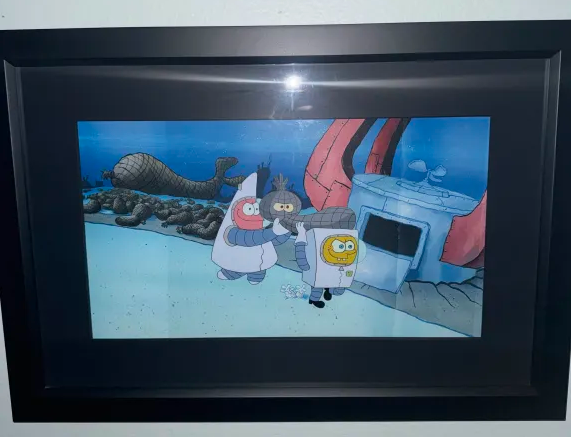
Framed Cel from Sandys Rocket - Spongebob Squarepants