
How to Authenticate Animation Art
Buying production art is a thrill, but it requires a detective’s eye. Unlike a standard painting, production art has a "DNA" left behind by the studio process. If a piece looks too perfect, it might actually be a red flag.
The Screen Match
The best way to prove a piece is real is to find the exact moment it appears in the show.
- Intricate Details: Look for "globs" of ink or slight irregularities in the line work. If those same tiny imperfections appear in the high-definition scan of the show, you have a match.
- Beyond the Frame: Real cels usually cover a wider area than what you see on TV. If your cel has "extra" art on the top or sides that was cut off by the camera, it’s a very strong sign of authenticity. This happens because animators often drew a character’s entire body, even if they were hidden behind an object to ensure the fluidity and volume of the animation. This also allowed for changes in post-production; if a director decided to move or re-frame a shot during editing, the "hidden" parts were already drawn and ready to be used.
Physical Evidence & "Imperfections"
Production art was a tool, not a finished product, so it should show signs of work.
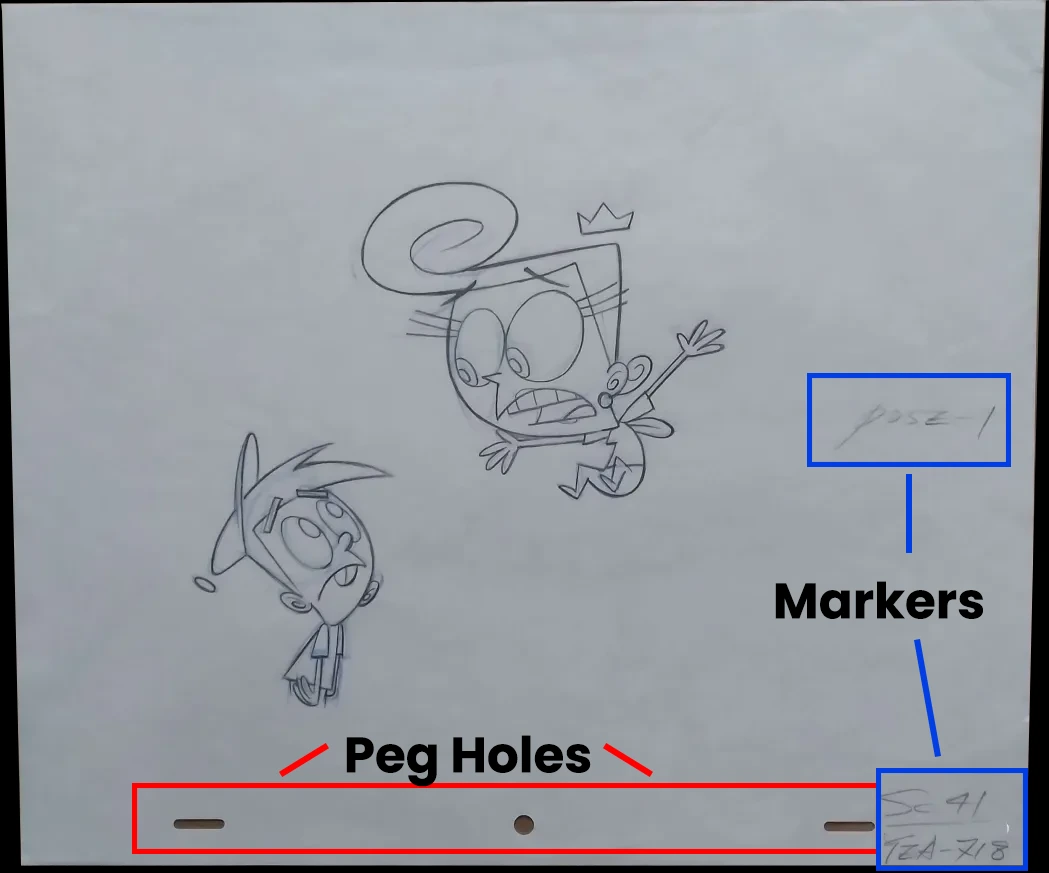
- Production Markers: Look for letters and numbers in the corners, typically at the bottom for Western art and at the top for Japanese pieces, which acted as a "map" for the camera operator to ensure the frames were filmed in the correct sequence.
- Reading Markings: While many use standard letters (e.g., A15, B2), Western studios often used character-specific initials, such as T12 for a "Timmy" layer or B5 for "Bugs," to help the camera department track multiple characters in a single shot. You may also see "Timing Charts" (vertical lines with ticks and numbers) which served as instructions for the in-betweeners to determine the speed and fluidity of the motion.
- Peg Holes: Authentic paper and cels have specific punch-hole patterns (usually the "Acme" standard) used to lock the art onto the animator's desk. In Western studios, peg holes are usually at the bottom because animators typically flip their pages downward to check their lines. In Japanese studios, peg holes are almost always at the top because the common practice is to flip the pages upward during the animation process.
- Line Fading & Vinegar Syndrome: On older cels (Disney/1980s Anime), the black ink lines often fade to brown or gray over time. If a 40-year-old cel looks like the ink was applied yesterday, be cautious.
- Inaccurate Color Palettes: Studios used secret, strictly controlled formulas for mixing their paint colors. Fakes often have colors that look "off" or too vibrant because they use modern hobby paints. A great way to spot a fake is to compare it to known real cels from the same production; if the "Day Colors" or "Night Colors" palette doesn't accurately match established pieces, it's a major red flag.
- Deleted Scenes & "Lost" Media: These are cels or drawings from sequences cut from the final edit, or even from projects that were never completed or released. While they don’t appear on screen, they are often highly sought after because they represent "lost" animation history. Collectors value these for offering a unique look at what a production could have been, or in some cases, providing the only surviving evidence of a project’s existence.
- Authenticity & Provenance: Since these frames cannot be "screen-matched" to a final broadcast, verifying the provenance of the piece is vital. This includes checking for studio markings, correct peg holes, or documentation showing the piece originated from a staff member who worked on the project.
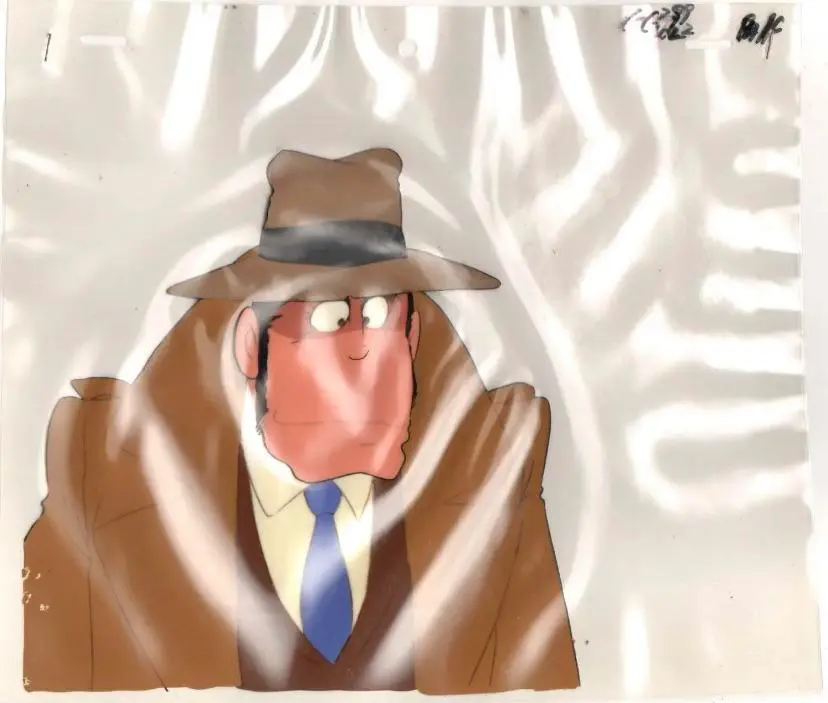
Example of Vinegar Syndrome. Look for wrinkling.
Red Flags to Watch For
- The "Too Good to Be True" Scene: If someone is selling a "Key" cel of a main character from a legendary show (like Dragon Ball Z or Sailor Moon) for $50, it is almost certainly a fake or a color copy.
- Modern Plastic: Authentic vintage cels are made of cellulose acetate, which has a specific feel and weight. Modern fakes often use thin, flimsy overhead projector plastic.
- Multiple Listings: If you see the exact same cel listed by five different sellers on eBay, it’s usually a "dropshipper" stealing a listing from a Japanese auction. Only one of them actually has the item.
What about COAs?
A Certificate of Authenticity (COA) is only as good as the person who signed it.
- Studio Seals: A gold or silver embossed seal from Disney, Warner Bros, Hanna-Barbera, or COA's from studios directly is the highest level of proof.
- Third-Party COAs: Be wary of generic, printed COAs from unknown eBay sellers. A real COA should provide a "paper trail" (provenance) of where the art came from. You should research if the brand or gallery is reputable & how long they have been around. Check our Trusted Sellers page. A COA must be signed by a brand/company. A COA without a physical address or a way to contact the company is a major red flag
- No COA: It might surprise beginners, but many of the most valuable pieces in the hobby especially in Anime do not have a COA. Because studios viewed these as industrial waste, they didn't issue certificates when the art left the building. In these cases, we look for Provenance (the history of ownership) and "Production DNA" (matching drawings, sequence numbers, and peg holes) to prove it's real. Trust the art, not just the paper.
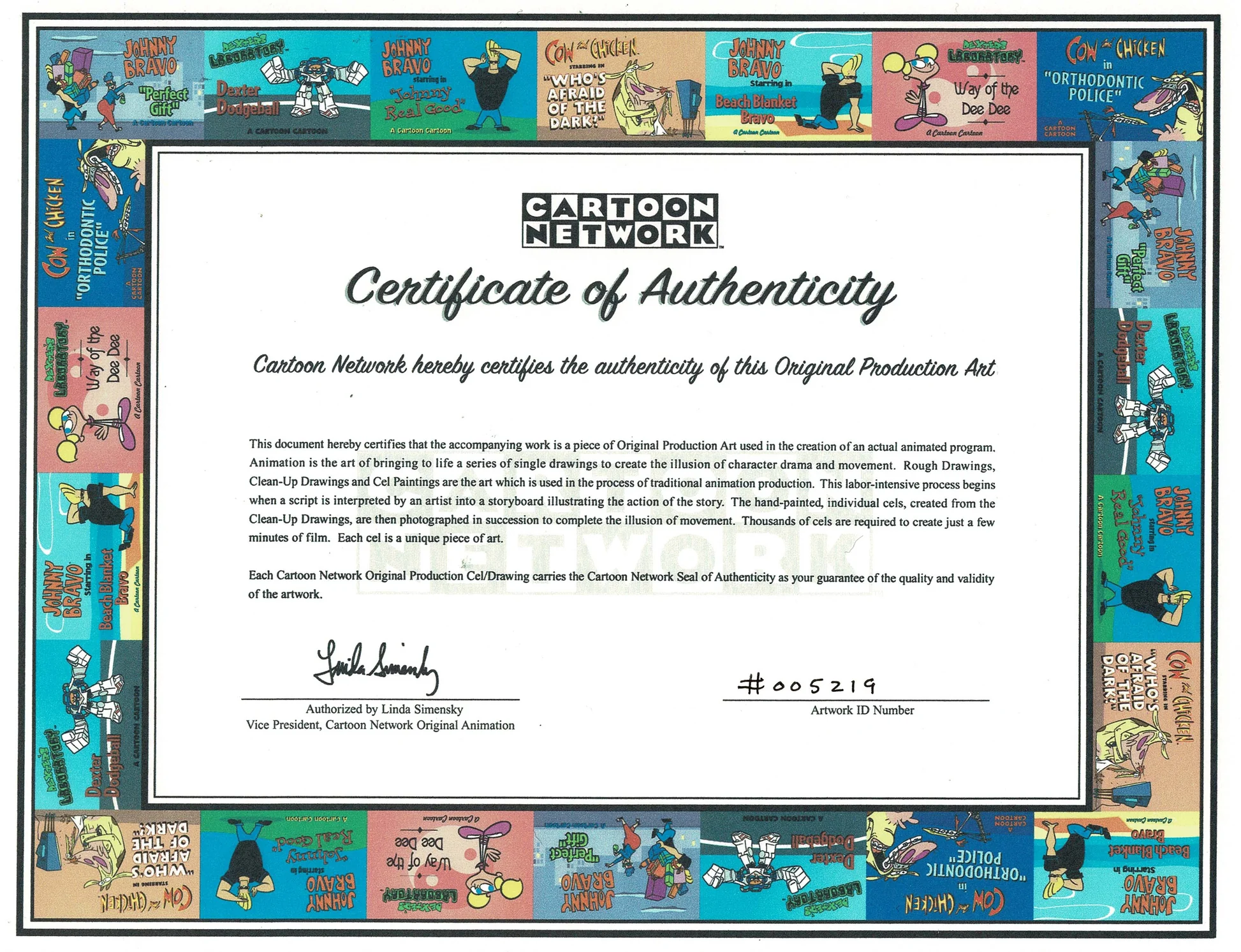
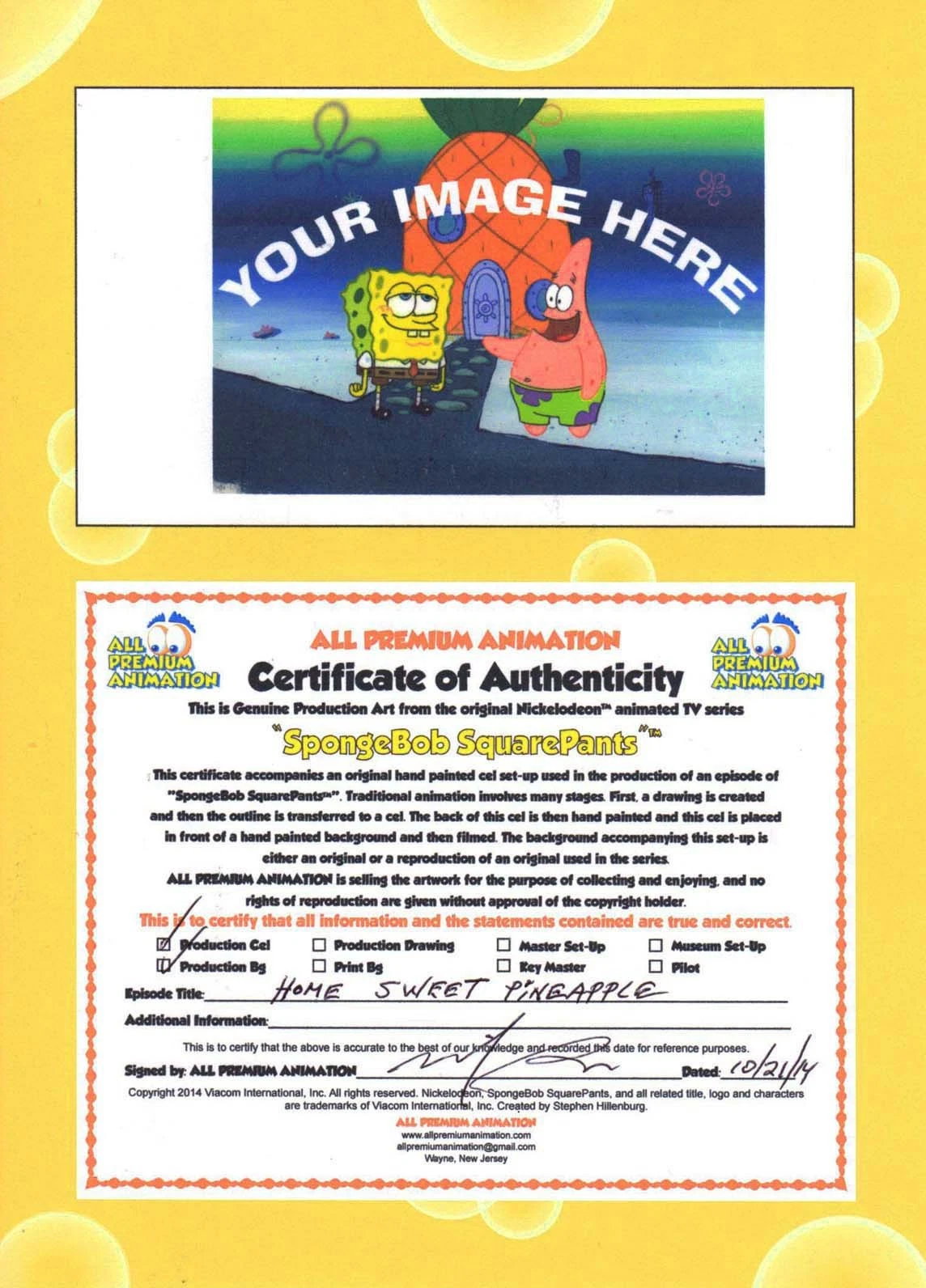
Studio Seals & Official Packaging
While many cels have no paperwork, some studios released pieces including Sericels through official channels (anniversaries, galleries, or fan clubs) that carry unique physical markings.
- Studio Pierrot Seals: Pieces sold or gifted at official events often feature an embossed Studio Pierrot anniversary seal. There's even reproduction Sericels of Naruto or Bleach. with stamps.
- Toei Animation "Sticker" Sets: Toei often sold cels in official gallery packaging, a protective bag held closed by an official Toei sticker. These often come in cardstock frames. This is why many Dragon Ball Z backgrounds are trimmed; the studio cut them down to fit into these official retail frames.
- Cartoon Network: Frequently used embossed or gold foil seals with a matching number on the COA, especially for shows like Johnny Bravo or Powerpuff Girls.
- Nickelodeon & MTV: Instead of stickers, these studios often used embossed stamps, a colorless, raised impression pressed directly into the cel or paper. For shows like Beavis and Butt-Head or SpongeBob Squarepants, look for these "blind stamps" in the corners of the acetate. The no longer existing company Animatied Animations was given Nickelodeon production to sell in the early 2000's which come with stamps.
- Legacy Studio Seals - Disney, Warner Bros., and Hanna-Barbera: They are the masters of the embossed foil seal. These are usually accompanied by a sequence number that acts as a serial number for the piece, or Sericels.
- The Courvoisier Seal: For vintage Disney collectors, a "Courvoisier" matte and seal indicates the piece was prepared for sale in the 1930s or 40s by the original official retailers of Disney art.
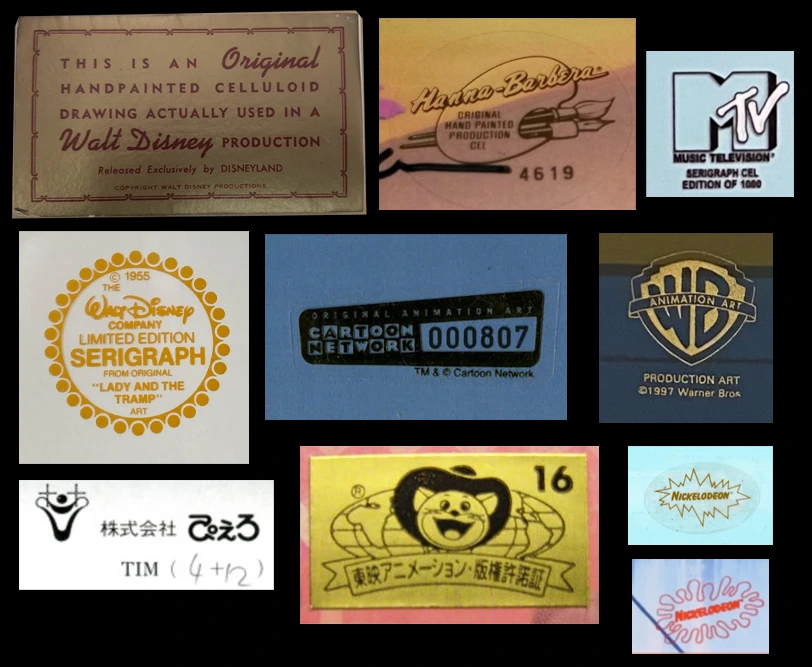
Various examples of well known Seals & Stamps