
Types of Animation Production Art
Not all production art is created equal. Some pieces were used for the final filming, while others were just "blueprints" used to plan a scene. Understanding the difference is the key to knowing exactly what you are buying and why certain pieces command a premium price.
Animation Cels (Hand-Painted)
The Production Cel is the most iconic form of animation art. These are the actual hand-painted sheets of acetate used to create the final image seen on screen.
- Key Cels: These are frames which are painted to exactly match the drawings by the lead animators. The lines get xeroed and the paint on back is done by another person.
- In-between Cels: These are the frames that fill the gaps between key movements to make the animation smooth.
- Background Paintings: These are often the most beautiful pieces, lush, hand-painted landscapes (usually in gouache or watercolor) that provided the world for the characters to live in.
- Multi-layer Cels: Sometimes a character is split into layers (e.g., the body is one cel, and the mouth is another). When these are sold together, it’s called a "complete setup."
- Setup Differences: Cels can come with different variations of setups. The first is Copy BG, the background is a printed copy. Master Setup includes a hand painted background from the episode / film but not the exact scene as the cel. A Key Master is the exact background and cels for the scene.
- Seri & Limited Cels: These are not used in production. Sericels (Serigraphic Cels) are mass-produced, usually numbered, through a silk-screening process, while Limited Editions are hand-painted recreations made specifically for collectors. They are beautiful for display, but they lack the real factor and historical value of a unique piece that people still see today.
- Rilezu (Re-release): A newer category of reproduction. While not production pieces themselves, a true Rilezu is a unique 1-of-1 edition based on the final production douga of a famous sequence. These are hand-painted and numbered similarly to traditional cels. A legitimate Rilezu is distinguished by the fact that it comes paired with the original production douga used during the making of the show.
Production Drawings
Before a cel is ever painted, it starts as a pencil drawing on paper. For many collectors, these are even more desirable than cels because they show the raw, unfiltered hand of the animator.
If you are collecting Japanese Anime, you will encounter the specific terms "Genga" & "Douga". The Japanese production system differs slightly from Western studios. A major portion of production collectors obtain Japanese Anime Produciton.
- Roughs: These are the "soul" of the scene, typically drawn by Lead Animators (or Genga artists in Japan). These loose, energetic sketches are used to work out the character's acting, weight, and movement before any secondary details are added.
- Clean-ups (Douga): The final, polished pencil lines that are eventually traced or "inked" onto a cel. These are the final drawings used to create the cel. They are the "finished" pencil version of the character.
- Key Animation (Genga): These are the most valuable drawings and often feature colored pencil shading (usually blue, red, or yellow) to indicate where highlights and shadows go.
- Living History: While cels are extinct, physical pencil animation is still practiced today. Many modern "digital" shows still begin with hand-drawn paper layouts and key frames before being scanned.
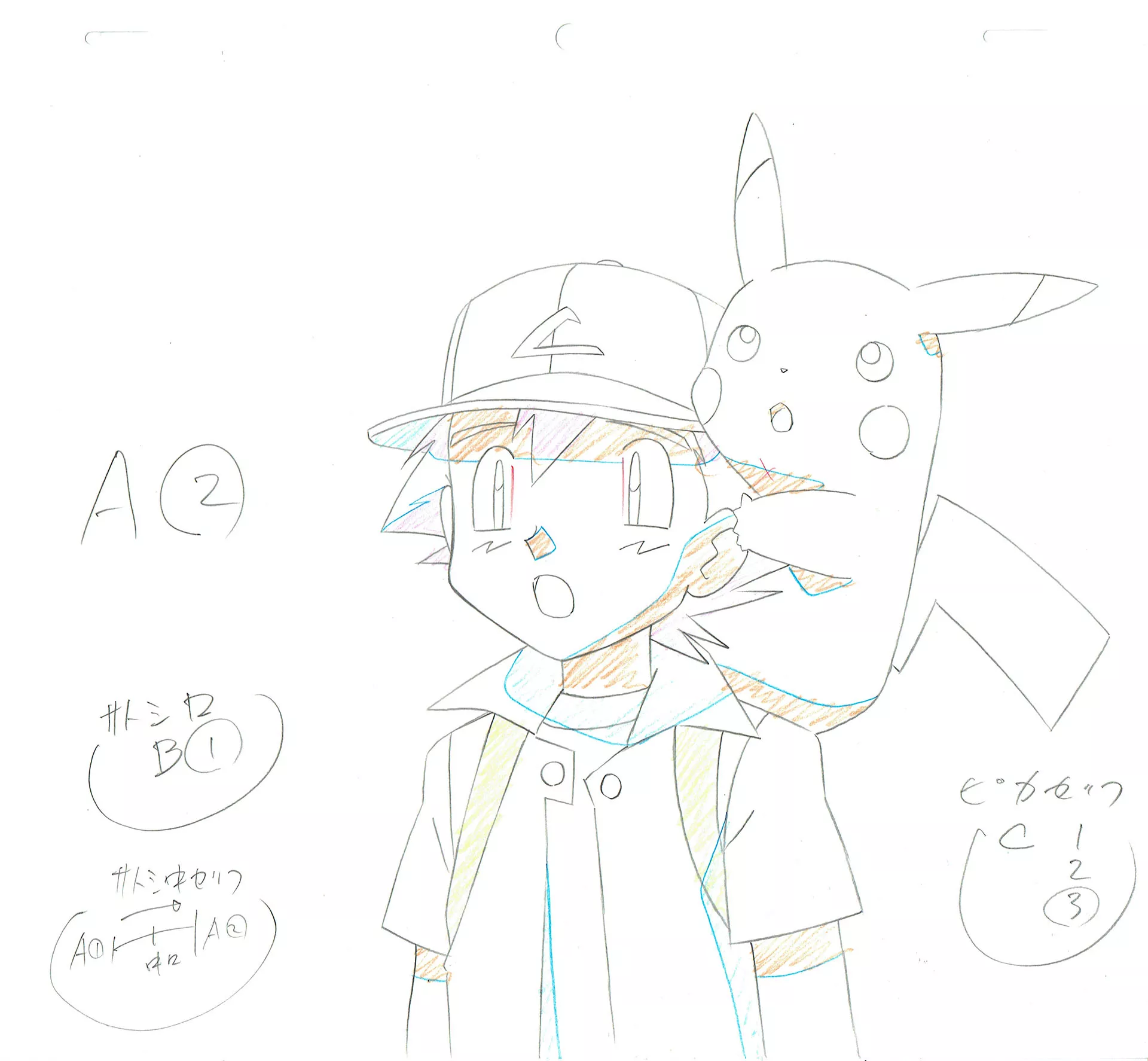
Genga of Ash & Pikachu - Pokémon
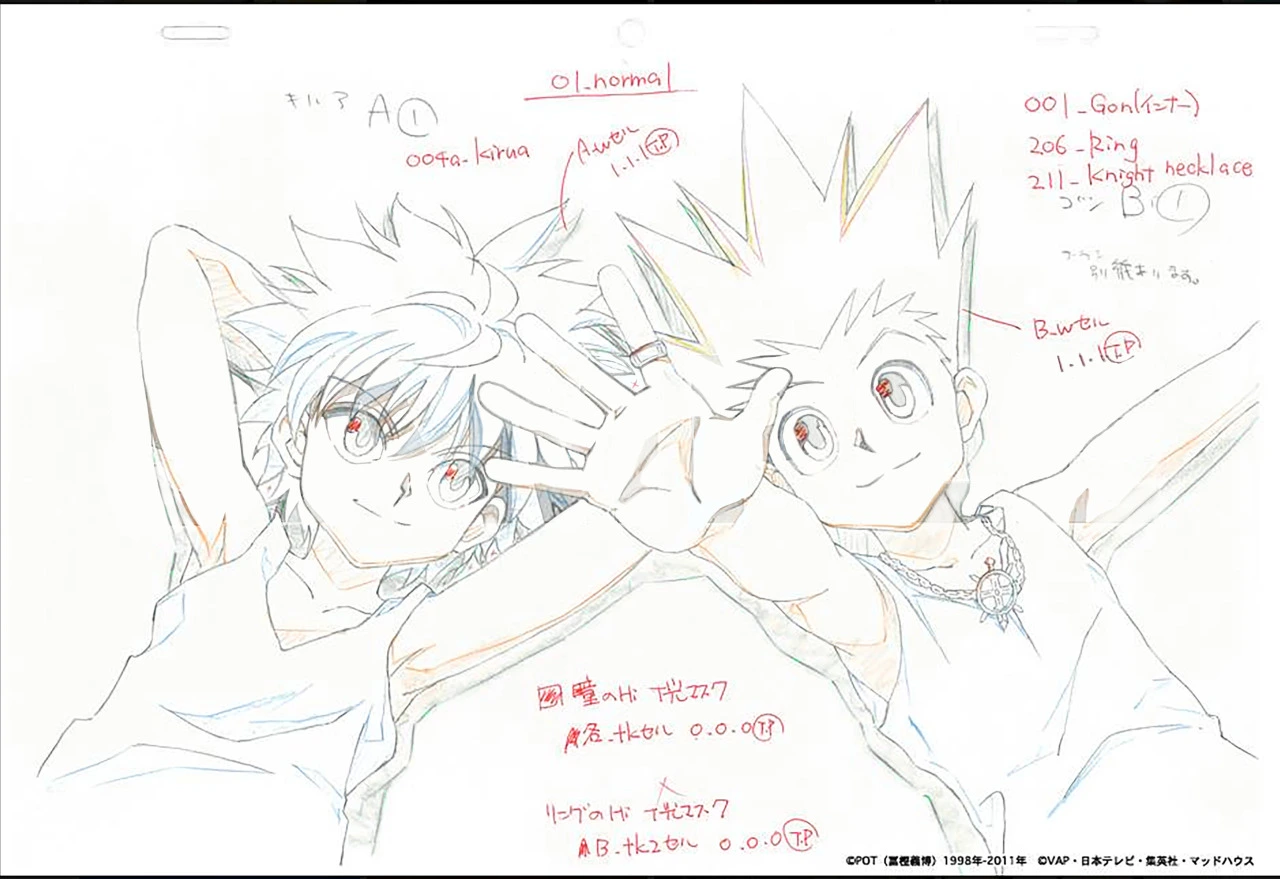
Keyframe for the Greed Island opening - Hunter x Hunter
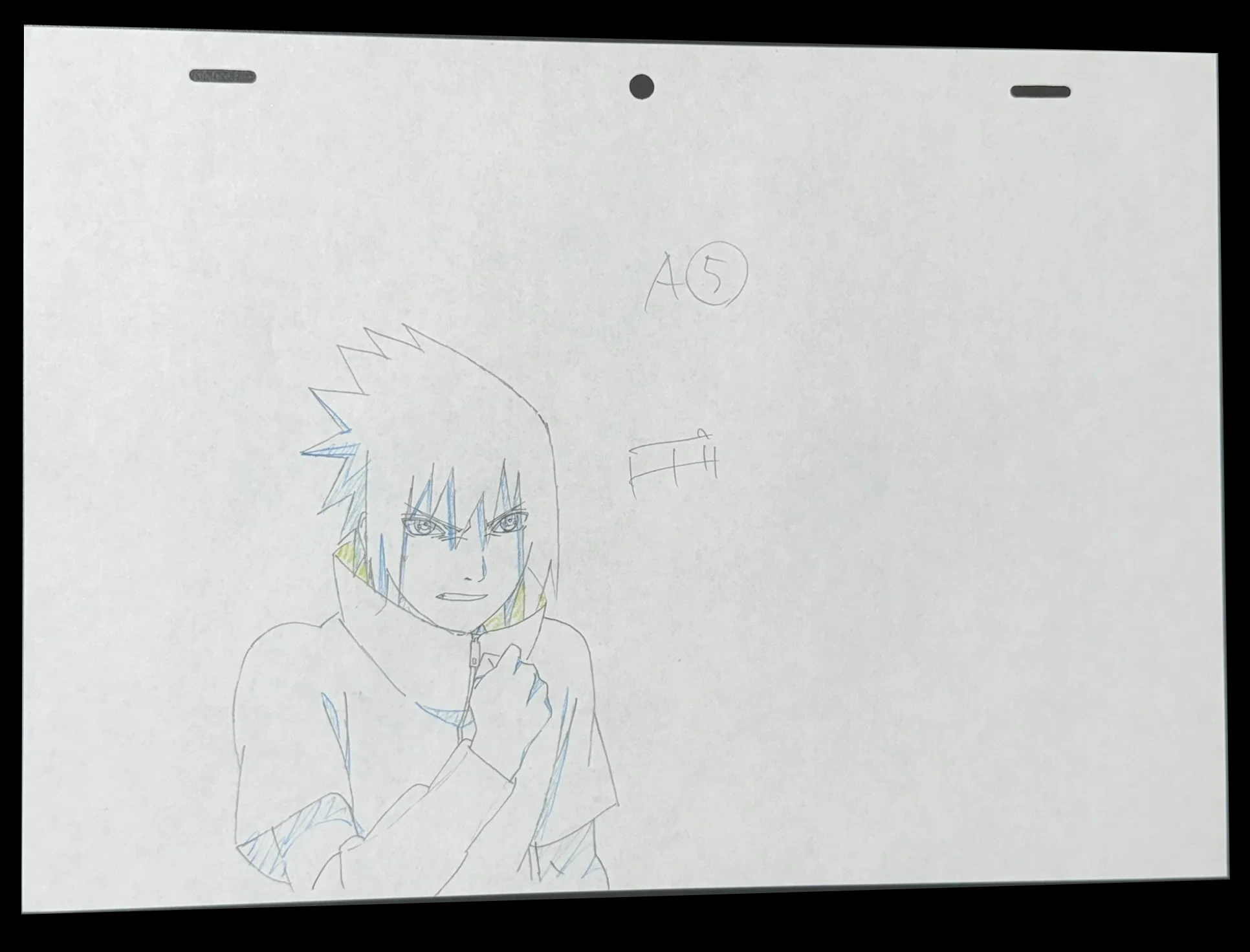
Genga of Sasuke - Naruto Shippuden
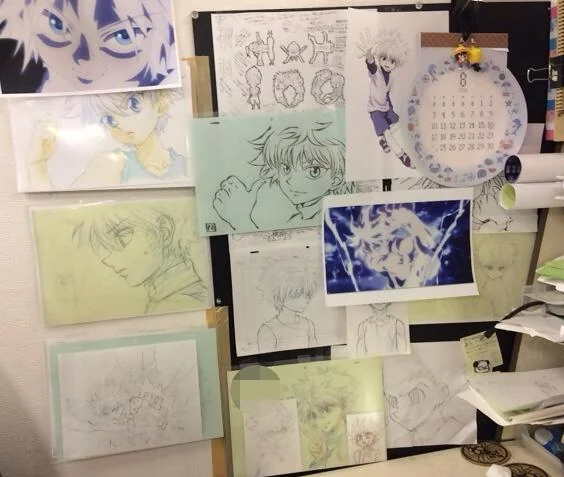
Workspace of a Madhouse Animator
Background Paintings
Backgrounds are the "world-building" pieces. Unlike cels, which are usually plastic, backgrounds are typically painted on heavy paper or board using Gouache, Watercolor, or Acrylic.
- Master Backgrounds: A hand painted background that was actually used in the episode or final film.
- Key-Master Setup: This is a production cel paired with the exact background it was filmed with. These are incredibly rare because backgrounds were often reused for multiple scenes while cels were filed away separately.
- Pan Backgrounds: Short for "panorama," these are oversized paintings much wider or taller than a standard frame. They were used for scenes where the camera "travels" across a landscape or follows a character running. Because they are 2-3 times larger than normal backgrounds, they are highly prized as standalone "museum" pieces. Pans also apply to the cels and sketches.
- Copy BG: Also known as a "Reproduction Background," this is a color print or Xerox of an original background. Since thousands of cels are made for every one hand painted background, studios often include these copies so the collector can see how the character looks in its original setting. While the background itself isn't an original painting, it is the standard way to display a production cel.
- Harmony Shots: Mostly seen in Anime, these are "stills" where the animation stops and the scene is shown as a highly detailed, textured painting (often with a "painterly" or colored pencil look). They are used to emphasize a dramatic moment or a character's intense emotion. These are some of the most sought after backgrounds because they are the "peak" of the show's artistic quality.
- Gross-Ups (Extreme Close-Ups): A term coined during the production of The Ren & Stimpy Show (and later made famous by SpongeBob SquarePants). These are hyper-detailed, often "disgusting" close-ups of a character’s face, an object, or a pore. In production, these are usually large, standalone paintings because the standard character design isn't detailed enough to handle such a tight zoom.
- Background-Only Shots: Sometimes called Scenics or Establishing Shots, these are frames where no characters are present. These pieces are pure world-building, focusing entirely on the atmosphere, lighting, and architecture of the setting.
- Prints: These are high-quality scans or digital copies of original background art. Because original hand-painted backgrounds are so rare, collectors often use prints to create a "complete" look for a standalone cel.
- Collector Prints: Many fans scan original backgrounds they own and print copies for others to help display their cels in the correct setting.
- Museum/Gallery Prints: High-end companies like Riekeles specialize in archival, limited-edition prints of famous backgrounds from legendary films. These are often featured in museum exhibitions worldwide and are highly valued by collectors as the next best thing to owning the original "master" painting.
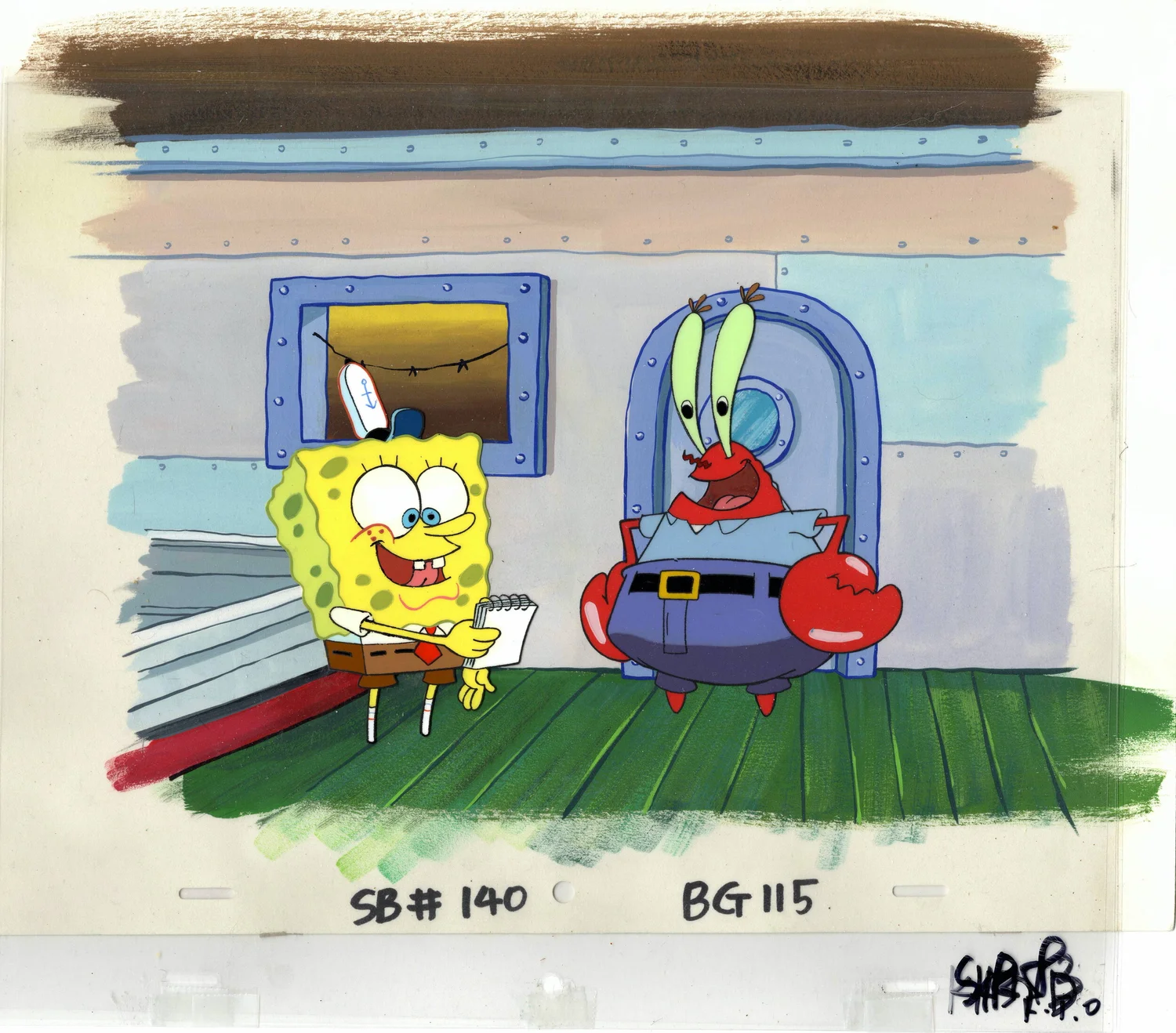
Painted Background from pilot episode "Help Wanted" - Spongebob Squarepants
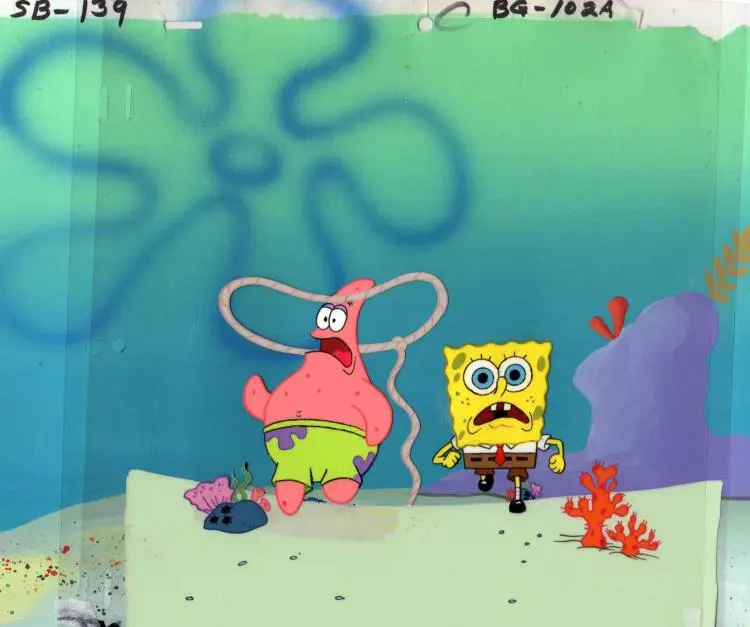
Master Multi Cel Setup from "Texas" - Spongebob Squarepants
Storyboards & Layouts
These are the "blueprints" of the episode or movie.
- Storyboards: Small, comic-strip-like sketches that map out the plot and camera angles.
- Layouts: Large-scale drawings that define exactly where the characters and the background elements sit in a specific shot.
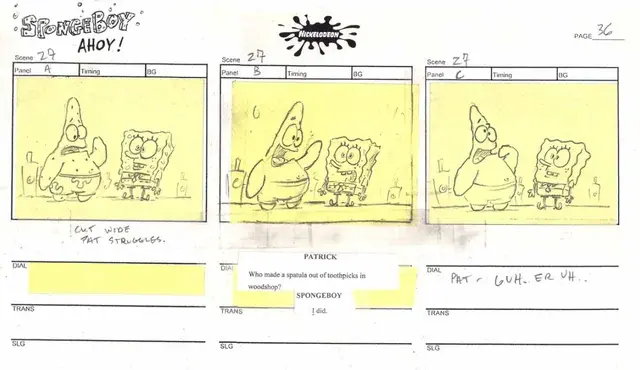
Storyboard from pilot epiosde "Help Wanted" - Spongebob Squarepants
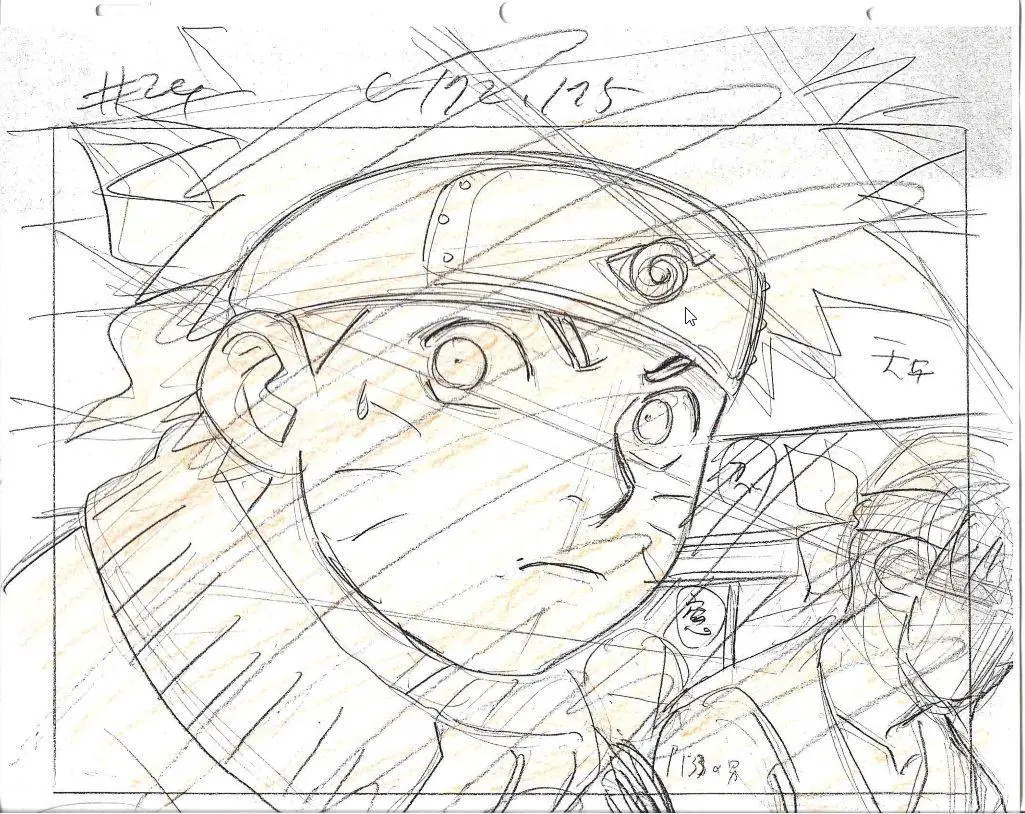
Layout drawing - Naruto Shonen Jump
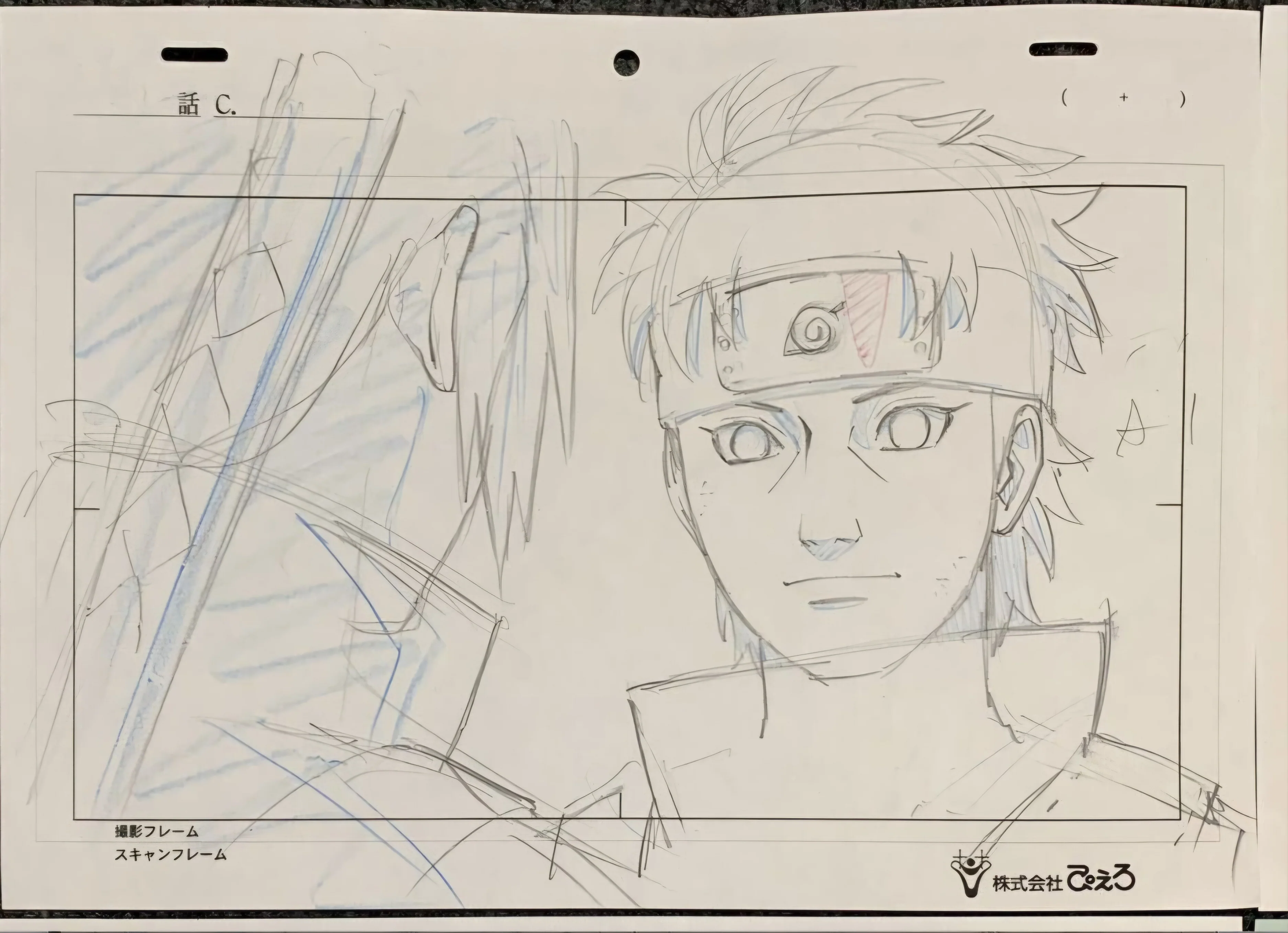
Layout drawing - Naruto Shonen Jump
Model Sheets & Color Guides
These were the "Instruction Manuals" for the studio.
- Model Sheets: Reference sheets showing a character from every angle to ensure all animators drew them the same way (also known as "Character Sheets").
- Color Guides: Charts used by the "Ink and Paint" department to ensure the character's colors stayed consistent throughout the show.
- Settei (Japanese Model Sheets): In Anime, these reference materials are called Settei. This term isn't limited to characters; it includes everything from props and weapons to vehicles and room layouts.
- Settei Copies vs. Originals: It is important to know that studios typically make sets of photocopies from the Original Settei to hand out to every animator on the team. When you see Settei for sale, they are almost always these authentic production-used copies. While rare, the hand-drawn originals do occasionally make it to market and command a significantly higher price.
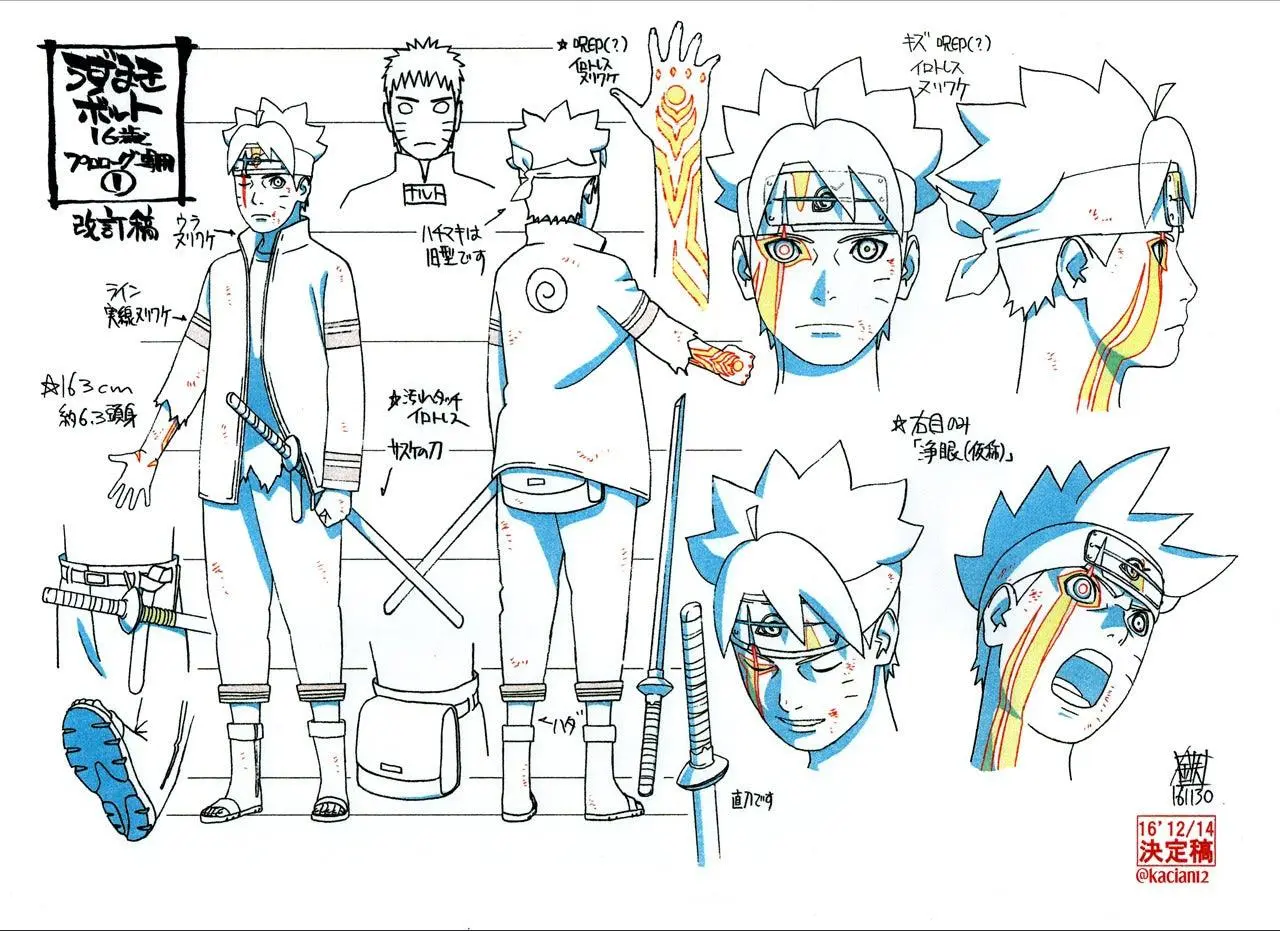
Episode 1 Timeskip Model Sheet - Boruto: Naruto Next Generations
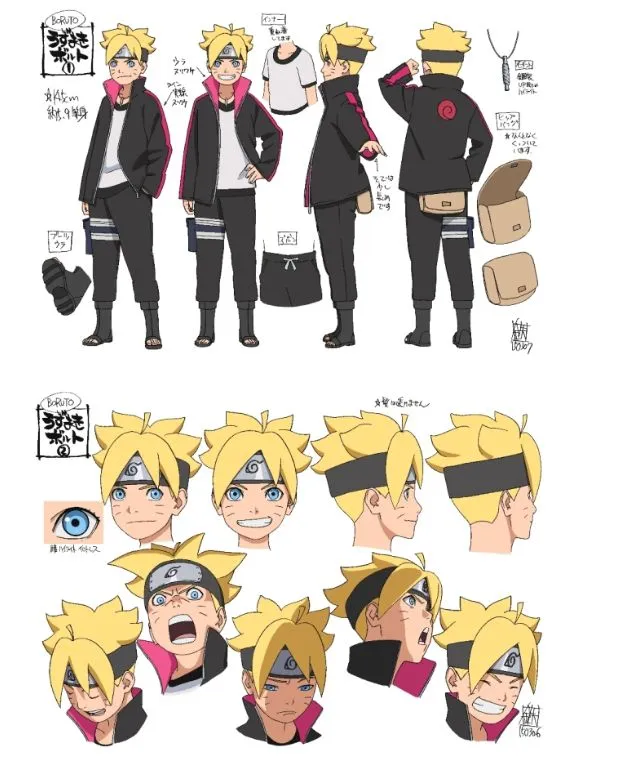
Boruto Model Sheet & Color Guides - Boruto: Naruto Next Generations